
Exploration: gravity anomalies, routes and returning to a zone
Treat the environment as a set of possible surfaces. In a Gravity Anomaly, the route can continue along what first looked like a wall or an upside-down street.
Reviewed October 1, 2026
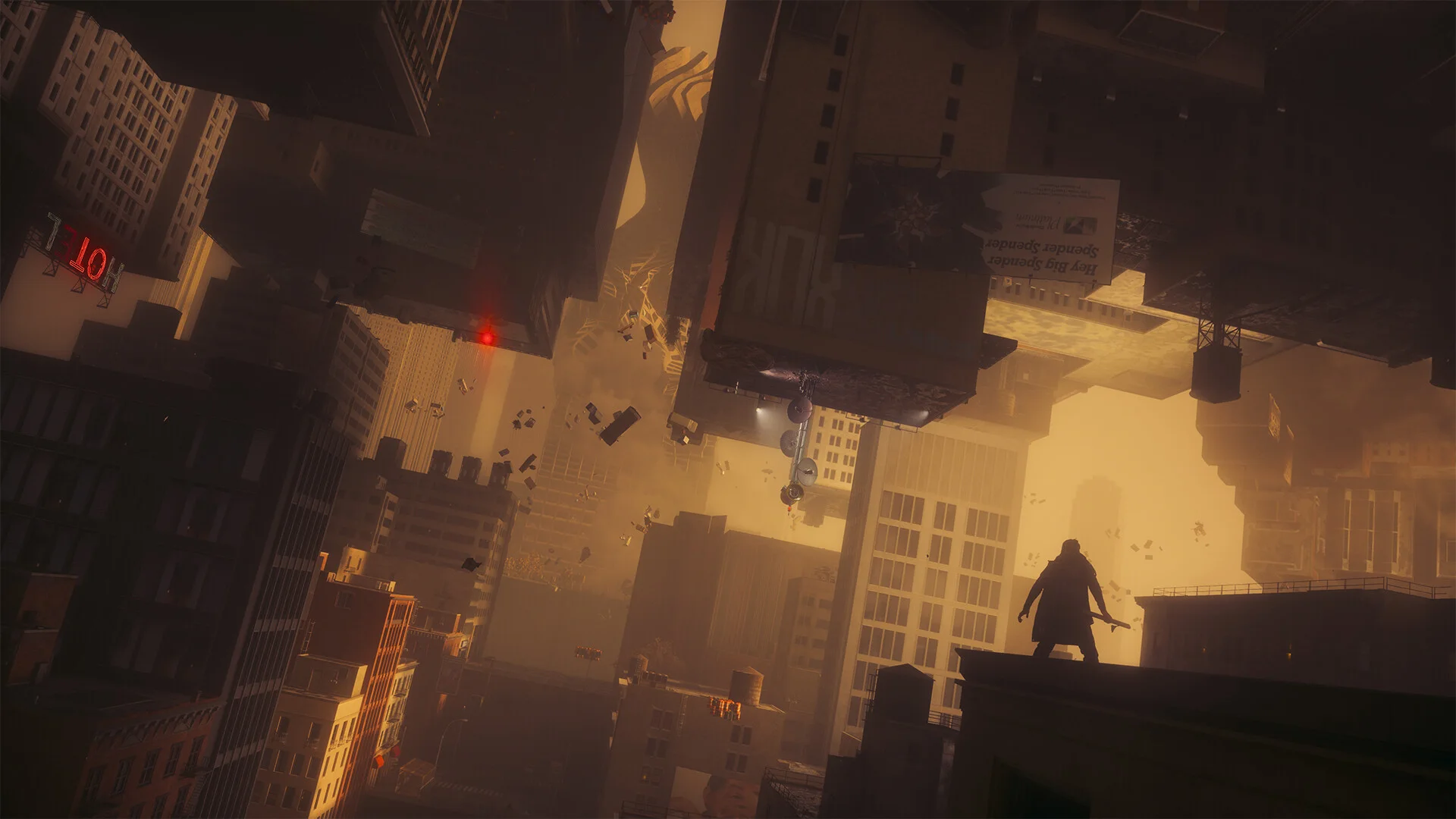
Read the next surface before you move
The developer overview identifies Reach as a traversal ability and Shift as a way to redirect movement through Gravity Anomalies. A reachable, walkable surface can become your ground even when its orientation looks wrong.
Suggested route test: locate a likely landing surface, inspect the connection to the following surface, then make one movement at a time. If the route fails, reassess orientation instead of repeating the same jump.
Sources: Developer gameplay overview ↗
Look for the game's environmental cues
The September art-and-design interview identifies FBC satellite dishes around many Fast Travel doors and deflated FBC balloons near map towers. These are useful recognition cues while reading an unfamiliar street.
Use the cue to locate the feature, then confirm it with the actual interaction in your game. It is a recognition aid rather than a complete coordinate map.
Sources: Developer art and world interview ↗
Leave a return plan
- Choose a nearby activity or route you can inspect in one trip.
- Notice a clear landmark near the route entrance.
- If a route appears inaccessible, record the obstacle and the ability you think might matter.
- Return after a relevant progression change, and test whether that obstacle is now solvable.
This is a field-guide planning method; it does not assert a hidden unlock requirement for a specific collectible.
Zones give exploration its structure
CONTROL Resonant uses large, distinct zones with optional activities alongside its central story. Continue through the story when it gives you a clear objective, and revisit areas when your toolkit or your immediate goal changes.
Sources: Remedy: getting started ↗